My main area of expertise, if you can call it that, is very much with bathrooms. This has come about due to an elision of a number of circumstances. At first, I kept myself on the periphery, writing on larger, grander and more accessible themes. Eventually however I ended up specialising, drawn to certain companies and subjects as my own curiosity (or editors) directed me.
This encompasses all manner of areas, among the most specific of which includes how to go about choosing a bathroom radiator. The thing is now, with the array of designs, setups, shapes and finishes, a radiator can quite literally be put to design use anywhere around the home.
Now, for me, the concept of a contemporary radiator can be a hard thing to quantify and identify. It can be shapes, or sizes, or even finishes. For me, vertical radiators tend to look more modern; I tend to believe it is their unorthodox fitting and aspect that most impresses.
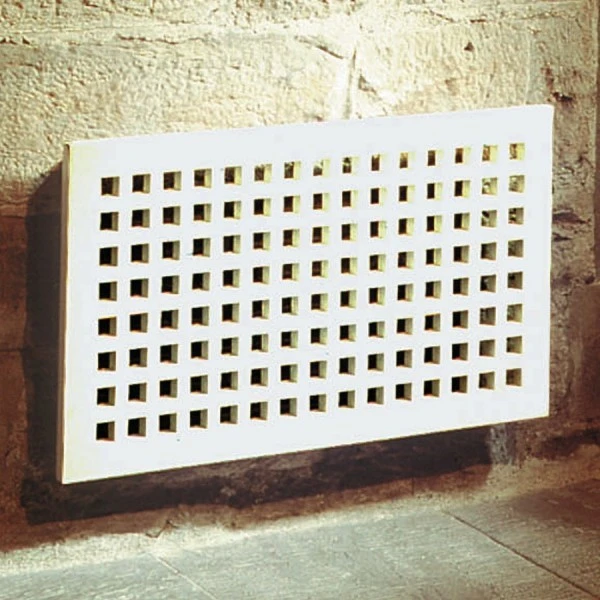
Following this, I find that horizontal radiators struggle to make the same modern effect. This is in part due to the fact that horizontal radiators as a concept tend to err on the side of tradition and ‘playing safe’, perhaps due to the fact that radiators were always predominantly designed and fitted in this way. This has changed a mite in recent times though, as the above image demonstrates.
To be more elaborative, this shows the accomplishment of that extremely difficult balancing act between a modern and classic radiator. The waffled design – I feel – could go in almost any style of room or bathroom. It is light and modern looking, with the holey (not holy!) frame representing a retro look that is, counter-intuitively, quite ‘in’ now!
Having said that, this isn’t a radiator that shouts. The finish is smooth but not overtly glossy, carefully and thoughtfully burnished enough to look presentable without being too slick. And yet, it still looks either vintage, without being space age. It really is a quality all-round design.
To further bump up this radiator’s modern credentials you could either go for an electric model or – better yet – go dual fuel. This setup allows you to get the best of both worlds. To do this you have to install an electric element in the radiator, which gives you immediate control over the unit.
The best thing about doing this is the savings you can make on energy. A great example – and one much used by me – is drying clothes or towels in the summer months. Instead of cranking up the boiler and the rest of the system you can just turn on the solitary radiator or towel rail instead. That little bit of electricity will never equate to the energy used by a full system, and thus your bill will be noticeably reduced.
Well, it seems I fulfilled the promise of my title!