 When the car breaks, a window becomes damaged or the furniture needs replacing, it’s obvious. But knowing what condition your roof is in is not clear until it’s too late, and you discover a leak or dislodged tiles hit the floor. In most cases, damage sustained by your roof will only require a simple repair by a professional. However, sometimes you will be in need of a complete roof replacement.
So how can you tell?
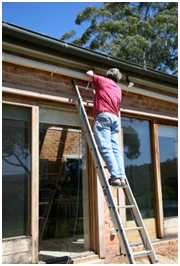
First of all, you’re going to have to get up there. Viewing your roof from inside or at ground level, even using binoculars and from a wider angle, will only highlight any superficial damage or ageing, so getting onto your roof is the only way to thoroughly check it. It goes without saying that this can be a highly dangerous activity, so make sure you carry this out in a safe manner – not in strong winds or rain, or without the use of a correctly stabilised ladder. This should happen twice a year, if National Roofing Contractors Association guidelines are to be followed.
Ladder Safety when Accessing your Roof
Whether putting up/taking down Christmas lights or checking rooflines after heavy wind, rain or snow, many will be scaling ladders this winter to get out on the roof. It goes without saying that this is a highly dangerous activity at any time of year, and winter is certainly no exception!
Here are a few tips to keep you safe when using a ladder to access your roof this Christmas…
Before starting any work, consider alternatives! Ladders are an effective way of climbing onto a roof, but are not the safest. Is the work possible from the ground? Clearing gutters of fallen leaves or removing snow and ice can be done using specially designed tools from ground level.
If not, steps should be taken to ensure that your ladder is fully stable before ascending. The Health and Safety Executive offers a number of guidelines in this respect. For example:
– Check that the angle of the ladder to ground or stable surface it is being placed on is close to 75 degrees. A simple way to remember this is the one-in-four rule: keep 1 metre of distance between the bottom of the ladder and the wall for every 4 metres the ladder is extended to. The top rung of the ladder should be at a level with the roof that allows for comfortable mounting and dismounting.
– The feet of the ladder should always be placed on solid ground that’s free of loose debris or gravel. In the colder months, ice should also be a consideration. For extended ladders and those used to access considerable heights, secure the top of the ladder to the landing surface wherever possible. Restraining straps can be used in some situations.
– As well as checking that the feet will not slide around while in use, the rungs of the ladder should also be inspected for oil, grease or other hazards that may result in a slip or fall.
– Extra care should be taken to inspect wooden ladders, as these are more susceptible to wear and tear, such as cracks, splintering, rot and mould.
– While using the ladder, always face forwards and keep both hands free to hold onto the sides while climbing and descending.
– Extending ladders can cause instability if not done correctly. There should be an overlap of at least 1 ½ rungs for ladders up to 5 metres in closed length, while those over 6 months should overlap by 3 ½ rungs.
All but the most minor roof repairs should be carried out by professionals, which is why climbing onto your roof using a ladder should be a last resort.
What to look out for?
If your roof is over 25 years old (especially if it is asphalt, slate or felt-based), chances are it will be in need of replacement. Check for any bowing, curling or buckling of the shingles, as well as obvious exterior damage, such as cracks or missing tiles. If several tiles are affected, this could mean that the whole roof will need changing, as opposed to a few shingle replacements.
If you notice a lot of granulated material in the guttering, this could be an example of crumbling shingles and is a big indicator of an aging roof. Similarly, any mould or fungus growth could point to poor ventilation as a result of wear and tear.
The material that your roof is made from will dictate how often it needs replacing, as well as the signals you should be looking out for. Metal roofing is highly durable and can last up to 60 years, any damage or aging here should be fairly obvious. The biggest danger to tiled roofs is cracked tiles, and if there is an excessive amount then this could mean a new roof is necessary. Single tiles that are damaged can be replaced, but take care when walking on your roof in this situation. Timber-based roofs will split or bow more easily, and can contract and expand in different temperatures, so look for misshapen roofs and any signs of water damage contact Precision Roofing to assist with your roof repairs.
Any roofing professional worth their salt will be able to carry out thorough inspections of your roof, offering advice as to its condition and performing any repair or replacement work necessary. So don’t wait until you spot a leak or suffer from internal mould growth – get your roof checked out now.